Expressions of interest are open

Think. Challenge. Share. Learn. Act.

Complex regulatory problems need more than one pair of eyes.

The Regulatory Clinic is a multidisciplinary, high-trust space for people doing the difficult work of regulation. Bring a live question. Test it against three complementary practitioner lenses and the experience of peers. Leave with clearer choices and a practical next move.

Book Q4 Clinic

Three practitioners · More than 90 years of combined experience · Australia and Aotearoa New Zealand · Every session held under the Chatham House Rule

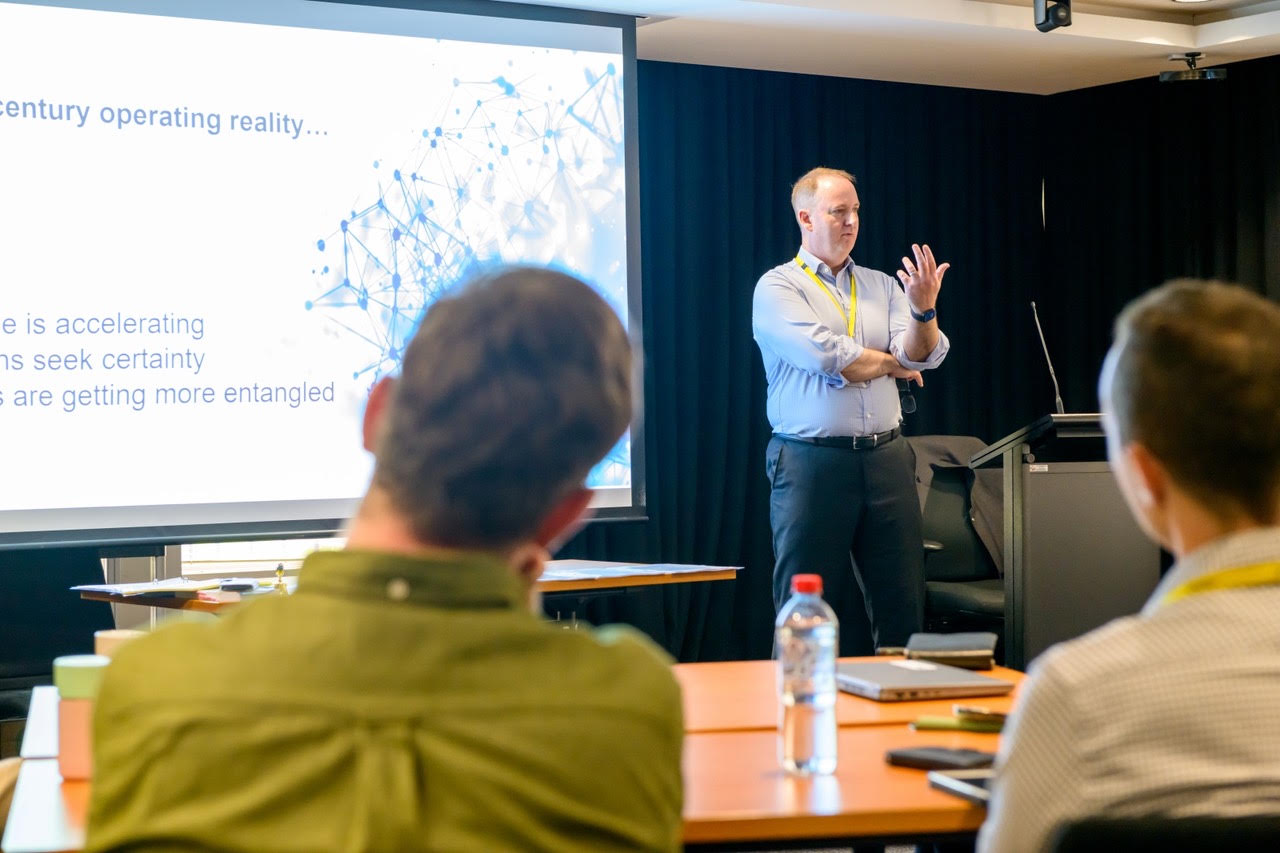
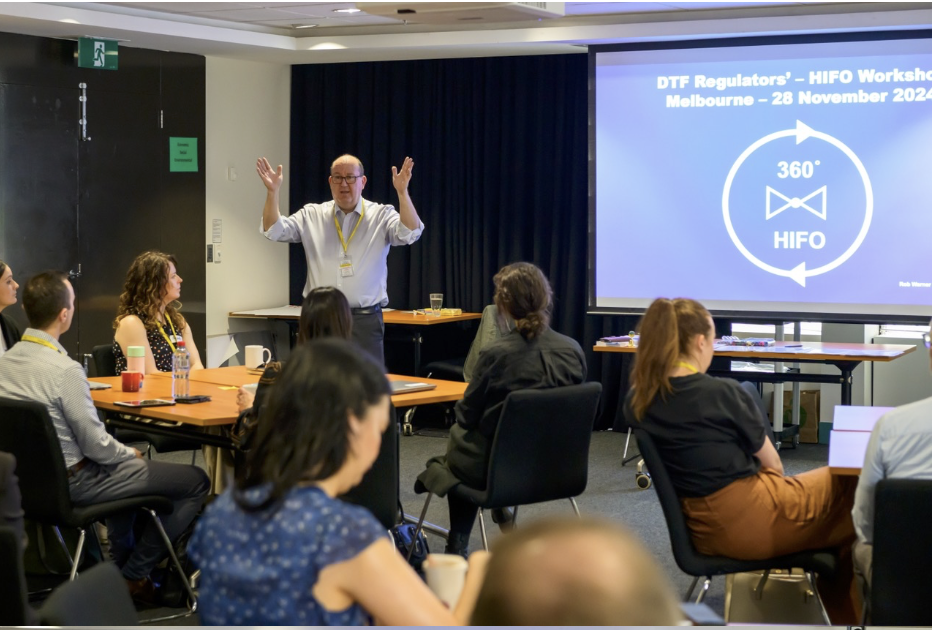
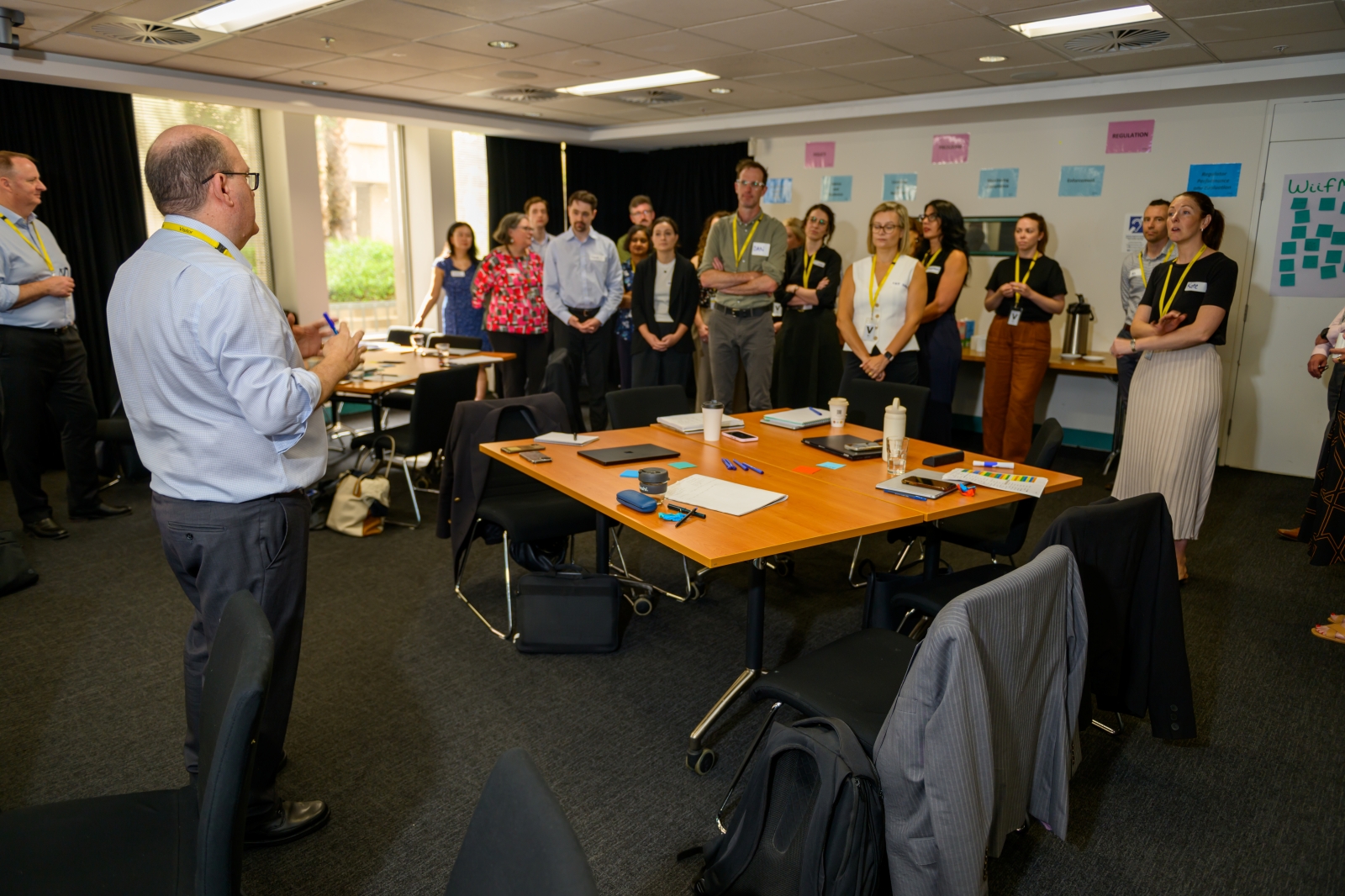
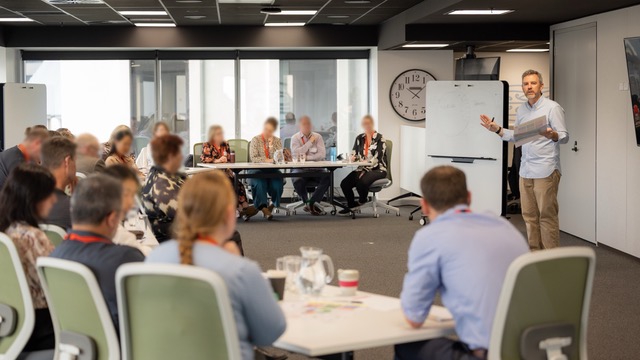
A participant speaking and gesturing during a group discussionParticipants in focused conversation around a tableParticipants listening during a working session

Scenes from earlier practitioner conversations in Australia and Aotearoa New Zealand.

The case for it

Why a clinic?

Regulatory problems rarely arrive neatly packaged. Law, policy, operations, behaviour, risk, politics and public value overlap. Advice from a single discipline can sharpen one part of the picture while missing the rest.

We established The Regulatory Clinic to bring practical experience, multiple perspectives and peer intelligence around the same question. It creates the conditions for regulators to examine what is really happening, challenge the way the issue has been framed and identify what deserves attention next.

Not a prescription handed down from the stage. A disciplined conversation that helps you see more before you act.

What’s said in the room does not need to stay in the room. In fact, because The Clinic operates under the Chatham House Rule, you can (and will likely want to) use the insight, you just cannot reveal (or attribute) the source.

A participant thinking during a workshop discussion

Who this is for

Who are you?

The Clinic is built for people carrying regulatory responsibility day to day and who rarely get the chance to step back from it.

  • 01You are a regulatory professional
  • 02You lead a regulator, a regulatory function or a regulatory team
  • 03You are busy, and you have a lot on
  • 04You seldom have time to stop, reflect and explore
  • 05You find it hard to unpack the regulatory challenges that keep you and your people busy
  • 06You need space to think differently about how you are regulating

How the Clinic works

Moving a tangled issue to a clearer next move.

  1. SCREEN01

    What is happening?

    Surface the issue, its context, the signals that matter and the assumptions shaping how it is currently understood.

  2. TRIAGE02

    What matters most?

    Examine the challenge through several practitioner and peer lenses. Test the framing, expose blind spots and identify where deeper attention could make a difference.

  3. ACT03

    What now?

    Strengthen the available options, connect the right experience and expertise, and settle on a next step you can act on.

A facilitator framing a session in front of a projected slide on operating realityA facilitator addressing regulators at the DTF Regulators HIFO workshop in MelbourneParticipants standing in a circle around a table while a facilitator speaks, with issue cards on the wall behind

Format · What you will do

Two days, together

Deliberately small: each cohort is limited to 18 participants.

Day one

10:00am – 6:00pm

Followed by dinner together with a guest speaker.

Day two

8:30am – 3:00pm

Closing with next moves you can carry back.

Mixed modalities

Writing · Talking · Sharing meals · Movement · Reflection

Preparation

Bring a regulatory issue that matters to you: the bottom or top drawer idea, challenge or problem you haven't had the time to unpack and resolve.

Process

Explore the framing of your issue, the methods you have used and the tools at your disposal, then develop a proposed action that turns energy, excitement and new insight into tangible next steps.

Output

A proposed action or set of next steps, with a six-week group check-in (online) after the workshop to see where you have landed and what you have reflected on.

Capability · Capacity · Confidence

Capability to see and frame the issue.

Capacity to work it with others.

Confidence to make and explain the next decision.

What to expect

An experience built from and within the room

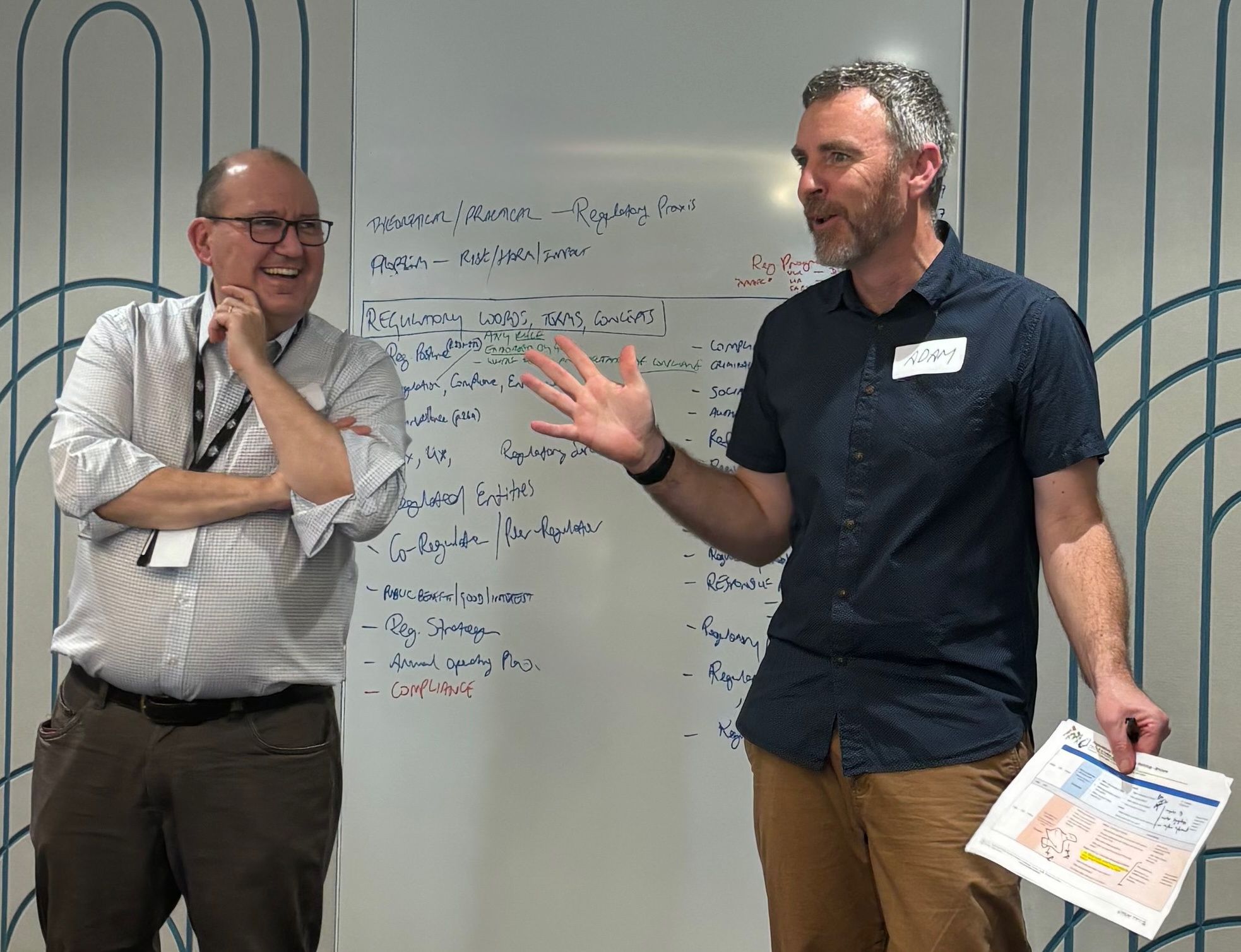
Grant Pink and Adam Beaumont in discussion at a whiteboard mapping regulatory words, terms and concepts

Comfort to share and explore

A combination of professional and psychological safety that lets you be brave: to share, unpack and explore challenges, test assumptions and open up options.

Make space

Space and time to think about you as a regulatory professional: advancing regulatory practice, ensuring effective regulatory delivery, and achieving the outcome your organisation was set up to deliver. Providing you with room to loosen the knot you bring to work on.

Perspective from others

Through the experience of your peers and three practitioner lenses, you unpack your challenge and clarify the next right move.

What's in it for you

Success is that you…

Recognise

That your problem, issue, challenge or opportunity is probably not unique to you. As your regulatory peers are likely carrying a similar challenge in a different context, and what they have attempted may well apply to you and your regulatory agency or organisation.

Build clarity

Use the space and peer perspectives to reframe your regulatory problem, understand its scale and gain clarity.

Create momentum

Leave with clear next steps and tangible progress on a challenge that matters to you.

Develop community

Create a new cohort of regulatory peers, with different perspectives that support you as part of the broader regulatory profession.

What to expect

Curated Regulatory Conversations

Small-group, semi-structured working sessions for regulatory leaders and practitioners. The Clinic provides the questions, scaffolding and three complementary practitioner lenses. Participants bring live experience, evidence and problems worth working on.

The balance is deliberate: informed challenge, candid peer exchange and enough structure to move beyond discussion.

This is not a lecture, and talking at you. Or a webinar, with networking tacked on. It is a working conversation.

  • A carefully framed regulatory question
  • Three complementary practitioner perspectives
  • Candid peer exchange
  • Clearer choices and practical next steps
Two facilitators seated at a table in conversation with participantsA facilitator working at a whiteboard with a seated group

Initial conversations are being shaped for Australia and Aotearoa New Zealand. Dates, locations and formats will be shared first with people who register their interest.

Three practices. One clinic.

Complementary experience around the same table.

The Regulatory Clinic brings together three independent practitioner-advisers with complementary experience across regulation, enforcement, strategy, capability, governance, facilitation and applied foresight.

Portrait of Adam Beaumont

Adam Beaumont

With Purpose Solutions

Strategist, facilitator and regulatory adviser who works with executives, leadership teams and boards. Adam brings more than 25 years across environment, sustainability, compliance and regulation, with particular depth in behaviour change, governance and complex group work.

LinkedIn profile for Adam Beaumont (opens in a new tab)
Portrait of Dr Grant Pink

Dr Grant Pink

RECAP Consultants

Regulatory practitioner, executive, academic and adviser with more than 35 years across regulatory and enforcement practice. Grant’s work focuses on regulatory capability and capacity, networks, collaboration and the language of regulation.

LinkedIn profile for Dr Grant Pink (opens in a new tab)
Portrait of Rob Warner

Rob Warner

Fathom Practice

Regulatory strategist, certified strategic foresight and applied-complexity practitioner with more than 30 years across New Zealand government. Rob works at the intersection of strategy, governance, sense-making and better decision-making under uncertainty.

LinkedIn profile for Rob Warner (opens in a new tab)

The practices behind the Clinic

Each practice remains an independent business.

Questions

What happens next, and what you are agreeing to.

If your question is not here, ask it in the form below or email us. We would rather answer it than have you guess.

Can I really afford two days away?

It's highly likely you've already spent far in excess of two days on the issue or problem you're wanting to discuss. Having the ability to discuss it in a focused, structured way, to go deep rather than skim the surface, with fellow practitioners will likely be one of the best investments you make.

When booking, can I be invoiced?

The short answer is no. To keep administration simple and ensure places are confirmed immediately, registrations for The Regulatory Clinic are processed through TryBooking and paid by credit card at the time of booking.

After I book, can I get a refund?

Unfortunately, no. We cannot offer refunds due to the planning and administrative commitments made once a booking is confirmed. However, you may transfer your booking to another participant in exceptional circumstances.

What happens post clinic?

Within four to six weeks of the Clinic, we will host an online group check-in to reflect on where participants have landed, what they have learned, and how their thinking or actions have evolved since the session.

What happens after I register for the Q2 2027 cohort?

We use expressions of interest to shape cities and dates. Registered participants will be contacted in March 2027 about the Q2 2027 Clinic, and we will come back to you with the detail you need before you commit to anything.

Am I committing to attend if I register my interest for Q2 2027?

No. Registering is an expression of interest, not a booking. There is no payment and no obligation. You can withdraw at any time by replying to any email from us.

What is included in the price?

Your registration fee covers the Clinic curriculum, lunch on both days and the Day 1 dinner (excluding alcohol). You are responsible for getting there: your own flights, accommodation, ground transport and any meals outside the Clinic curriculum.

Who else will be in the room?

Regulatory leaders and practitioners from across Australia and Aotearoa New Zealand, in a cohort limited to 18 people i.e. 3 tables of 6.  We build each cohort so participants can speak candidly, which sometimes means holding places apart for people from the same organisation. For this reason, we limit participation from any one regulator to 3 people.

How is confidentiality handled?

Sessions run under the Chatham House Rule. You can use what you hear, but not attribute it. Anything you write in the registration form is seen only by the three convenors.

Do I need to bring something?

Yes. Bring one regulatory issue that matters to you: the top or bottom drawer problem you have not had time to unpack. You do not need a paper or a presentation.

What if my issue is urgent, or does not fit a cohort?

Tell us about it when you register. We will consider whether a focused conversation, a diagnostic or a connection to the right practitioner is a better fit. We will not pretend every problem belongs with us.


Q4 2026 Clinic · Melbourne

Book your place in the Q4 Clinic.

Places are limited to a cohort of 18. Early bird rate is $3,520 including GST. Full rate is $4,510. Bookings are handled securely through TryBooking.

Loading booking options…

Register

Can't do the Q4 clinic? Put your name down for the next Clinic.

In medicine, a hard case goes to a multidisciplinary team, not a single specialist. A regulatory problem deserves the same consideration and deliberation. The Regulatory Clinic’s Q4 2026 cohort is now able to book.  Can't do Q4, register your interest for Q2 2027.

Timing

Book now for the Q4 2026 Clinic. The Q4 clinic will be held in Melbourne on 10-11 November 2026. Places are limited to 18 participants, and registered participants will be contacted in early October with further details.

Location and cost

Q4 Cohort will be held in Melbourne. Early bird rate is $3,520 including GST. Full rate is $4,510.

Shared only with the Clinic’s practitioners, in confidence.

0/750 characters